The short answer
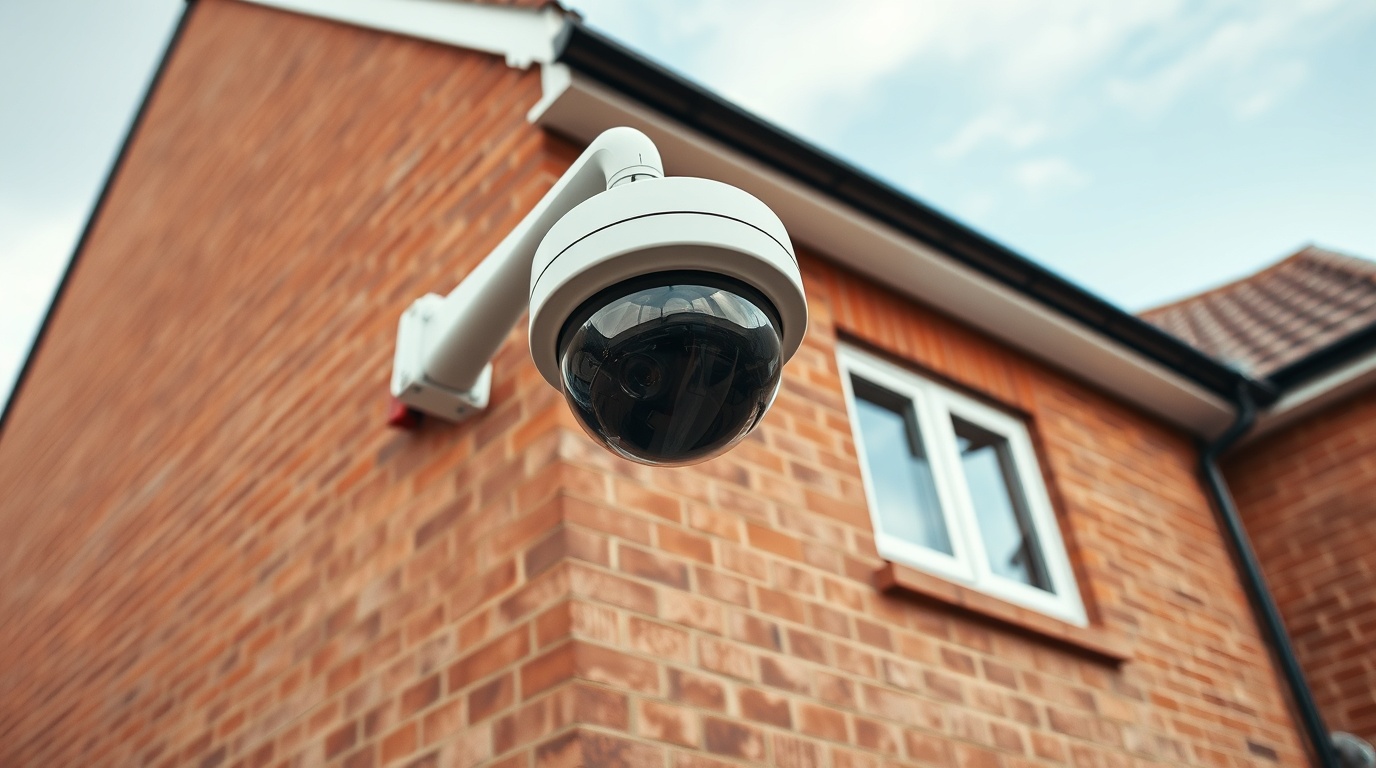
Bullet cameras are long, visible and good for covering a specific distance such as a drive, while dome cameras are discreet, harder to tamper with and suit wide, close-range coverage. A bullet camera has a cylindrical body that points clearly in one direction, making it an obvious deterrent and well suited to a longer, focused field of view. A dome camera sits in a low, rounded housing, often under a tinted cover, so it is unobtrusive, harder for someone to grab or redirect, and its shape hides exactly where it is aimed. Performance (resolution, night vision) is not decided by shape — both come in similar specifications — so the choice is mainly about visibility, mounting and the area each needs to watch.
Bullet and dome describe camera shape and housing, not picture quality. The sections below explain what each form does best and where to use them around a home.
Bullet vs dome
- Bullet best forLonger, focused range (e.g. driveway)
- Dome best forWide, discreet, close-range cover
- Most visible deterrentBullet
- Hardest to tamper/redirectDome
- Decides image qualityNeither — spec does
What a bullet camera does
A bullet camera has a long, cylindrical body that clearly points in one direction. That visible, unmistakable form makes it a strong deterrent — anyone approaching can see they are being watched — and the shape lends itself to a longer, focused field of view, so bullets suit watching a driveway, a path, a gate or along a boundary. They are typically wall-mounted on a bracket, are easy to aim precisely, and the housing usually has a built-in sun shield that helps in bright or wet weather. Larger bullets can also accommodate bigger lenses for greater range.
The trade-offs are that their prominence makes them an obvious target for tampering, and because the body protrudes it can be grabbed or knocked out of alignment. They also advertise exactly where they are aimed, which a determined intruder could exploit. For open, clearly-watched areas, though, that visibility is a feature, not a fault.
What a dome camera does, and how they compare
A dome camera sits inside a low, rounded housing, frequently under a tinted cover that conceals which way the lens points. This makes it discreet and architecturally tidy, and crucially harder to tamper with: the smooth, flush form gives little to grab and resists being knocked off-aim, which is why domes are popular where vandal resistance matters or where a camera should blend in. Domes are commonly ceiling- or soffit-mounted and tend to give a wider, closer-range view of an area rather than a long reach, suiting porches, entrances, hallways and patios.
The limits are a generally shorter effective range than a bullet and a slightly fiddlier install if you need to reach the housing to adjust it. Importantly, shape does not set image quality — both come in matching resolutions and night-vision options. The table compares the forms.
| Feature | Bullet camera | Dome camera |
|---|---|---|
| Typical range | Longer, focused | Wider, shorter |
| Visibility/deterrence | High | Lower (discreet) |
| Tamper/vandal resistance | Lower | Higher |
| Aim is obvious | Yes | Hidden by cover |
| Common mounting | Wall | Ceiling/soffit |
| Sets image quality | No | No |
Indicative comparison for guidance. Sources: manufacturer specifications, Checkatrade.
Where each suits a home, and mixing them
For a typical house, the two forms cover different jobs and most installs sensibly use both. Put bullets where you want a visible warning and a longer reach: along the driveway, watching the front approach, down a side passage, or covering the length of the rear garden. Put domes where you want discretion, wide close-range cover and resistance to interference: over the front door and porch, under a soffit watching an entrance, or anywhere within easy reach where a protruding bullet could be grabbed. Mounting height and reach also guide the choice — high, out-of-reach positions suit bullets, while lower or sheltered spots suit domes.
Whichever you pick, the factors that actually decide whether footage is usable are the same: adequate resolution for the distance, good night vision (infrared or low-light), weatherproofing rated for outdoor use, and sensible positioning. And the same privacy duties apply under the ICO's domestic-CCTV guidance regardless of shape — angle cameras to minimise capturing a neighbour's property or the street, make recording clear, and keep footage no longer than necessary. Choose by the area, the mounting and the level of deterrence you want, not by assuming one shape is better; the best result usually comes from matching each camera form to the spot it covers.
Frequently asked questions
Are bullet or dome cameras better for a driveway?
Bullet cameras usually suit a driveway because their shape gives a longer, focused field of view and their visibility deters. Mount them high and out of reach, aimed along the drive, and check the resolution is high enough to make out faces or number plates at the distance you need.
Do dome cameras have worse picture quality than bullets?
No — picture quality is set by the camera's resolution, sensor and lens, not its shape. Both bullet and dome cameras come in matching specifications, so a dome and a bullet of the same spec will produce similar image quality; choose the form by range, visibility and mounting instead.
Which is harder to vandalise, bullet or dome?
Dome cameras are generally harder to tamper with, because the smooth, flush housing gives little to grab and resists being knocked off-aim, and the tinted cover hides where the lens points. Bullets protrude and clearly show their aim, making them easier to redirect or interfere with.
Sources & further reading
Figures on this page are typical UK ranges drawn from published sources and depend on your specific property and system. They are guidance, not a quotation.