The short answer
A video doorbell watches your front door and lets you see and speak to callers, while a CCTV system covers the whole property with multiple cameras and continuous recording — they answer different needs. A doorbell is a single, focused device: it streams the porch to your phone, alerts you when someone presses it or triggers motion, and supports two-way audio for parcels and callers. CCTV is a broader system of several cameras covering the driveway, garden, side access and rear, usually recording around the clock to a recorder or the cloud. If your main concern is who is at the door and managing deliveries, a doorbell suffices; if you want to deter and record across the whole boundary, you need CCTV. Many homes use both.
These two are often confused because both show video on a phone, but they cover different areas and serve different goals. The sections below explain how they differ and when each makes sense.
Doorbell vs CCTV
- Doorbell coversThe front door/porch only
- CCTV coversMultiple areas of the property
- Two-way talk to callersDoorbell (and many cameras)
- Continuous recordingCCTV; doorbells often event-only
- Best whole-home coverCCTV
What a video doorbell does
A video doorbell replaces or sits beside your existing doorbell and adds a camera pointed at the porch. When a visitor presses the button or walks into its motion zone, it streams live video to your phone and lets you see and speak to the caller through two-way audio — useful for greeting couriers, telling a delivery driver where to leave a parcel, or checking who is at the door without opening it. Most save short clips of each event, either to local storage or to the cloud, and many run on a rechargeable battery so they fit without wiring, though hard-wired versions use your doorbell transformer for constant power.
Its strength is focus and convenience: it does one job well at the single point where most callers and deliveries arrive. Its limit is exactly that focus — a doorbell sees the front step, not the driveway behind a visitor, the side gate or the back garden, and it typically records events rather than running continuously.
What a CCTV system does, and how they compare
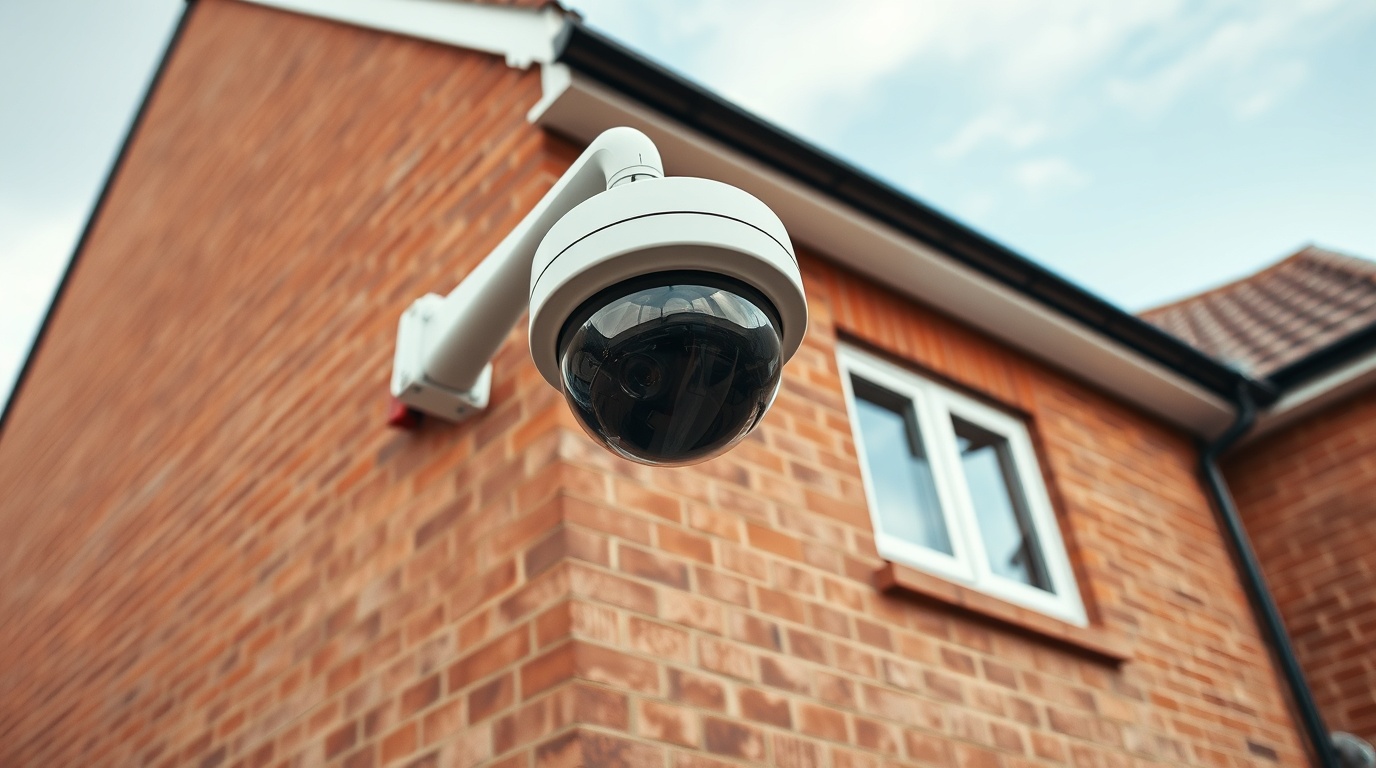
A CCTV system is built for whole-property coverage. Several cameras are positioned to watch the approaches and vulnerable points — driveway, front, side access, rear and garden — and feed a recorder (a DVR or NVR) or cloud storage, usually recording continuously rather than only on motion. This gives a complete record of activity, supports identifying intruders and provides footage for the police or an insurance claim. Many modern cameras also offer night vision, motion alerts and two-way audio, overlapping some doorbell features but across far more of the property.
The practical difference is scope. A doorbell answers "who is at my door?"; CCTV answers "what is happening around my home?". The two are complementary rather than competing, as the table shows.
| Feature | Video doorbell | CCTV system |
|---|---|---|
| Area covered | Front door only | Whole property |
| Number of cameras | One | Several |
| Two-way audio | Yes | Often yes |
| Continuous recording | Usually event-only | Yes |
| Deters across boundary | At the door | Across approaches |
| Evidence for incidents | Front step only | Multiple angles |
How a doorbell and a CCTV system differ in role. Sources: Which?, manufacturer specifications.
Cost, the rules, and which to choose
On cost, a single video doorbell is the cheaper entry point and a popular first step, with many models in the budget-to-mid range; some add a cloud subscription to keep clip history beyond a short free window. A multi-camera CCTV system costs more because of extra cameras, a recorder and, often, professional installation — typically a mid-to-higher outlay for a home — but local recording usually avoids ongoing fees. Both carry the same privacy responsibilities under the ICO's domestic-CCTV guidance: a doorbell pointed at the street or a neighbour's path, just like an over-reaching camera, brings data-protection duties to position it sensibly, make recording clear and handle footage fairly.
Which you need depends on the problem you are solving. If your concern is callers and deliveries and you want a simple, affordable device, a video doorbell is enough and easy to fit. If you want to deter and record around the whole property, or you have side and rear access to cover, you need CCTV. The common answer is both: a doorbell handling the front step plus a couple of cameras covering the driveway and rear gives full coverage without overlap, and several smart ecosystems let a doorbell and cameras share one app and one set of alerts.
Frequently asked questions
Is a video doorbell classed as CCTV?
In data-protection terms, a video doorbell that records people is treated like domestic CCTV, so the ICO's guidance on capturing beyond your boundary applies. Functionally, though, it covers only the front door, whereas a CCTV system covers multiple areas of the property.
Do I need CCTV if I already have a video doorbell?
Not necessarily — it depends on what you want to protect. A doorbell covers the front step and deliveries well. If you also want to deter and record across the driveway, side access and rear garden, adding CCTV cameras gives the whole-property coverage a doorbell cannot.
Can a video doorbell record continuously like CCTV?
Most video doorbells record events on a button press or motion rather than running continuously, partly to preserve battery life. Some hard-wired models offer continuous recording, but full 24/7 coverage of an area is more typical of a wired CCTV system with a recorder.
Sources & further reading
Figures on this page are typical UK ranges drawn from published sources and depend on your specific property and system. They are guidance, not a quotation.