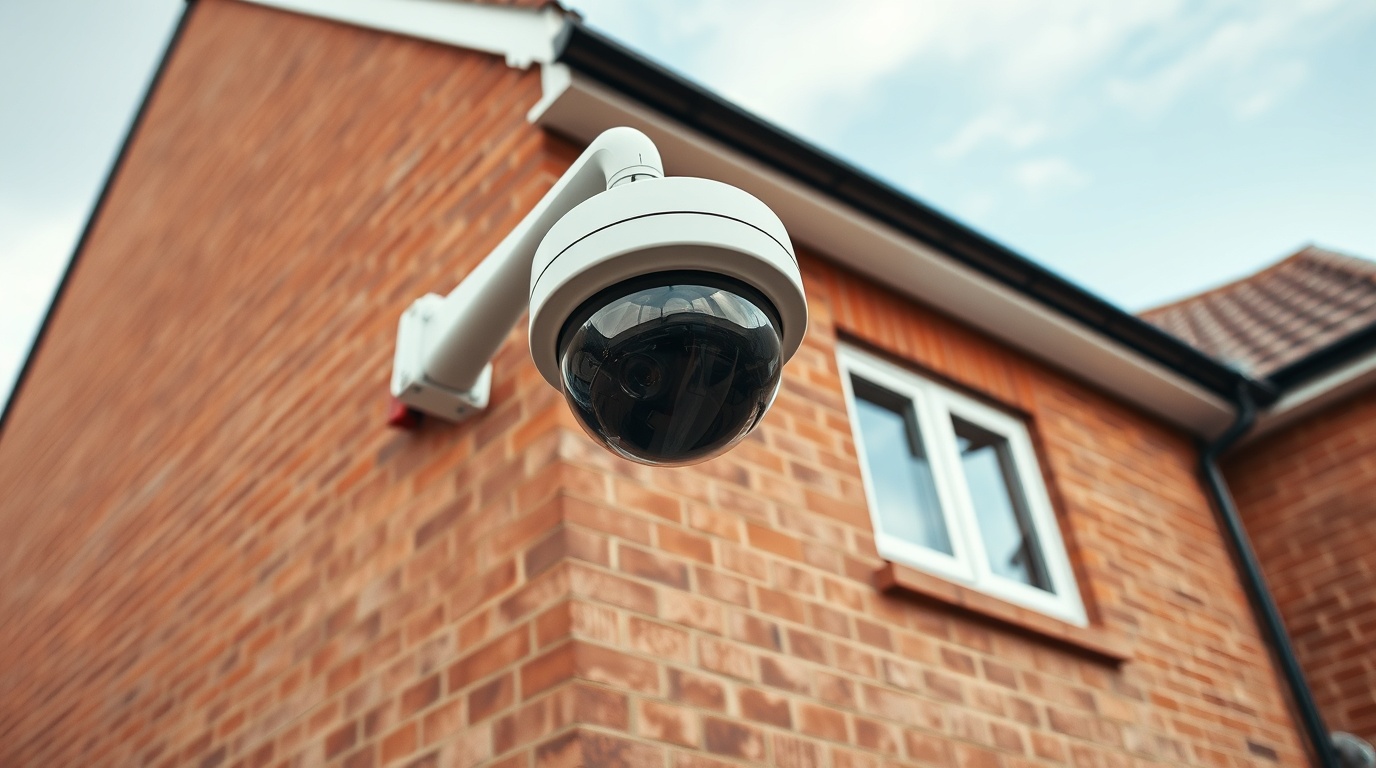
The short answer
Visible CCTV cameras do have a deterrent effect on opportunist burglars, who tend to choose easier, lower-risk targets. Police-backed guidance such as Secured by Design and Get Safe Online treats visible cameras as one element of effective home security, because the perceived risk of being recorded and identified makes a property less attractive. The deterrent is strongest when cameras are clearly visible, well-sited and paired with a sign, and when they work alongside good locks, lighting and the appearance of occupancy. On their own, cameras are not a guarantee — a determined or hooded intruder may not be deterred. They work best as part of layered security, not as a single fix.
Cameras are one of the most visible parts of home security, but their value lies in prevention rather than just recording. Understanding where the deterrent works helps you get the most from them.
Deterrent at a glance
- Main valuedeters opportunist burglars
- Strongest whenvisible, signed, well-sited
- Works best withgood locks and lighting
- Limitationnot a guarantee against determined intruders
- GuidanceSecured by Design, Get Safe Online
Why visible cameras deter
The deterrent value of CCTV rests on how most residential burglaries happen. The majority are opportunist rather than carefully planned, with intruders favouring properties that look easy to enter and unlikely to result in being caught. A visible camera changes that calculation: it signals that activity is being recorded and that an intruder risks being identified later. Faced with a choice, an opportunist is more likely to pass over a camera-equipped home for an unprotected one nearby.
Police-backed initiatives reflect this. Secured by Design, the official police security scheme, and public guidance from Get Safe Online both treat visible security measures, including cameras, as part of designing out crime and making a home a harder target. The deterrent works before any break-in, which is precisely where its worth lies — the goal is to prevent the event, not merely to film it after the fact. That preventive role is why even a modest, visible system can earn its place.
Cameras work best in layers
The honest qualification is that cameras are not a standalone solution. A camera above a flimsy back door tells an experienced intruder a different story than the same camera above a well-secured one. Security guidance consistently frames CCTV as one layer of defence in depth: solid doors and frames, good-quality locks (such as British Standard locks to BS 3621), window security, lighting that removes dark approaches, and habits that avoid advertising an empty home.
Within that layered approach, the camera reinforces the other measures and adds the prospect of identification. Lighting and cameras complement each other particularly well — a well-lit approach both deters and improves the footage if an incident does occur. The practical point is to avoid spending heavily on cameras while neglecting the basics. A burglar deterred by a camera but able to walk through an insecure door has not really been stopped; the camera does its best work when the rest of the home is genuinely hard to enter.
Getting the most deterrent value
How you deploy cameras affects how much they deter. Visibility is key: cameras hidden away may capture useful footage but deter no one, whereas a clearly visible camera and a CCTV sign at the approach to the property send the deterrent message in advance. Siting cameras to cover the likely points of entry — front door, rear access, side gates and any vulnerable windows — focuses the protection where it counts.
Modern features add to the effect. Motion-activated lighting paired with cameras startles and exposes an approaching intruder; app alerts let you respond in real time; and some cameras include sirens or two-way audio so you can challenge someone at the door. None of these guarantees prevention, but together they raise the perceived risk further. The aim is to make your property visibly the harder target on the street, so an opportunist moves on.
| Measure | Deterrent contribution | Notes |
|---|---|---|
| Visible camera + sign | high | signals recording before entry |
| Motion-activated lighting | high | exposes and startles intruders |
| Good locks (e.g. BS 3621) | essential base layer | physical barrier the camera supports |
| App alerts / two-way audio | moderate | enables a real-time response |
Indicative guidance on how cameras and complementary measures contribute to deterrence.
Realistic expectations
It is fair to set expectations honestly. CCTV reduces the attractiveness of a property and increases the chance of identification, but it cannot physically stop an intruder, and a determined, disguised offender may proceed regardless. Cameras also rely on adequate image quality and positioning to be useful after an incident — a poorly sited or low-resolution camera deters by its presence but may add little evidentially.
Seen in the round, the answer is that cameras do deter, particularly opportunists, and are a worthwhile part of home security — but as one element of a sensible, layered approach rather than a single guarantee. Combine visible cameras and signage with strong locks, good lighting and careful habits, and you create the harder target that deterrence depends on. That combination, endorsed by police-backed guidance, is what makes the deterrent effect real rather than theoretical.
It is also worth remembering that the deterrent value is hard to measure precisely, because a burglary that never happens leaves no record. Much of what cameras do is invisible by design: the intruder who walks past your home because of a visible camera and sign is a success you will never see. This is why security guidance leans on the consistent behaviour of opportunist offenders — choosing the easiest targets — rather than on a single statistic. The sensible conclusion is not that cameras stop every crime, but that they shift the odds in your favour, and that shifting the odds across several layers of security is what protects a home in practice.
One further habit makes cameras more effective: using them actively rather than passively. Checking alerts, responding through two-way audio when someone is at the door, and reviewing footage occasionally keep the system genuinely useful and remind you whether cameras are still well-positioned and working. A camera that has quietly failed or become obscured deters no one and records nothing. Treating the deterrent as something you maintain and engage with, alongside the locks and lighting around it, is what turns a piece of equipment on the wall into a working part of your home's security.
Frequently asked questions
Do dummy CCTV cameras deter burglars?
A dummy camera may offer a small deterrent at a glance, but experienced intruders can often spot fakes, and a dummy records nothing if a break-in does occur. A genuine, modestly specified camera with a visible sign offers both deterrence and evidence, which makes it the more reliable choice for most homes.
Are cameras or a burglar alarm a better deterrent?
They deter in slightly different ways and work best together. A visible alarm bell box and a visible camera both signal risk to an opportunist, while the camera adds the prospect of identification and the alarm adds noise and response. Most security guidance favours a layered approach combining both with good locks and lighting rather than relying on one alone.
Where should I put cameras for the best deterrent?
Site cameras so they are clearly visible at the likely points of entry — the front door, rear access, side gates and vulnerable windows — and pair them with a CCTV sign at the approach. Visible, well-placed cameras deter in advance, whereas hidden cameras may capture footage but do little to put an intruder off.
Sources & further reading
Figures on this page are typical UK ranges drawn from published sources and depend on your specific property and system. They are guidance, not a quotation.