The short answer
CCTV cameras should be positioned to cover a property's main entry and weak points: the front door, the back door, side access and the driveway, plus any vulnerable ground-floor windows or outbuildings. Mount them high enough to be out of easy reach but angled down enough to capture faces rather than the tops of heads, and avoid pointing straight into the sun or a bright window that washes out the image. Cover the routes an intruder must use, not just the corners of the building. Crucially, keep the view to your own property as far as possible — if cameras capture a neighbour's garden or the public pavement, the ICO's domestic CCTV guidance applies. This is general UK guidance.
Good positioning is what makes CCTV footage useful — and what keeps you within the law. The points below are general UK guidance.
Positioning priorities
- Priority spotsfront door, back door, side access, drive
- Heighthigh enough to be safe from tampering
- Angledown enough to capture faces
- Avoidfacing the sun or bright windows
- Legal limitkeep to your property — ICO guidance
The priority positions
Effective CCTV starts with covering the places that matter most, rather than scattering cameras around the building. The clear priorities are the entry points, because that's where an intruder has to be. The front door is the single most important position — most callers, deliveries and incidents happen there, and a camera covering it captures faces of anyone approaching. The back and side doors are next, as these are common forced-entry points precisely because they're less overlooked. A driveway or gate camera covers vehicles and anyone approaching, and can be set to read number plates if angled and specified for it.
Beyond the doors, think about the routes and weak points. Ground-floor windows that are hidden from the street, side passages, the boundary an intruder would climb, a garage or shed, and any dark corner of the garden are all worth covering. The principle is to capture an intruder on the path they must take — the approach to a door, the route across the garden — rather than only the building's corners. A camera that sees someone arriving and approaching gives far more useful footage than one that only catches them at the moment of entry.
It helps to aim for overlapping coverage where you can, so each important area is seen by more than one camera and there are no blind spots. This also means that if one camera is obscured or interfered with, another still captures the scene. You don't need a camera on every wall — a well-planned handful covering the doors, the drive and the main approaches usually protects a typical home better than a larger number placed without thought. Quality of coverage beats quantity of cameras.
| Position | Why it matters | What to capture |
|---|---|---|
| Front door | most callers and incidents | faces of anyone approaching |
| Back / side door | common forced-entry points | approach and entry |
| Driveway / gate | vehicles and visitors | people and, if specified, plates |
| Garden / side passage | hidden routes and weak spots | movement across the property |
| Garage / outbuilding | valuables, often overlooked | approach and access |
Indicative UK guidance, not exhaustive. Sources: HomeOwners Alliance and police Secured by Design guidance.
Height, angle and avoiding common mistakes
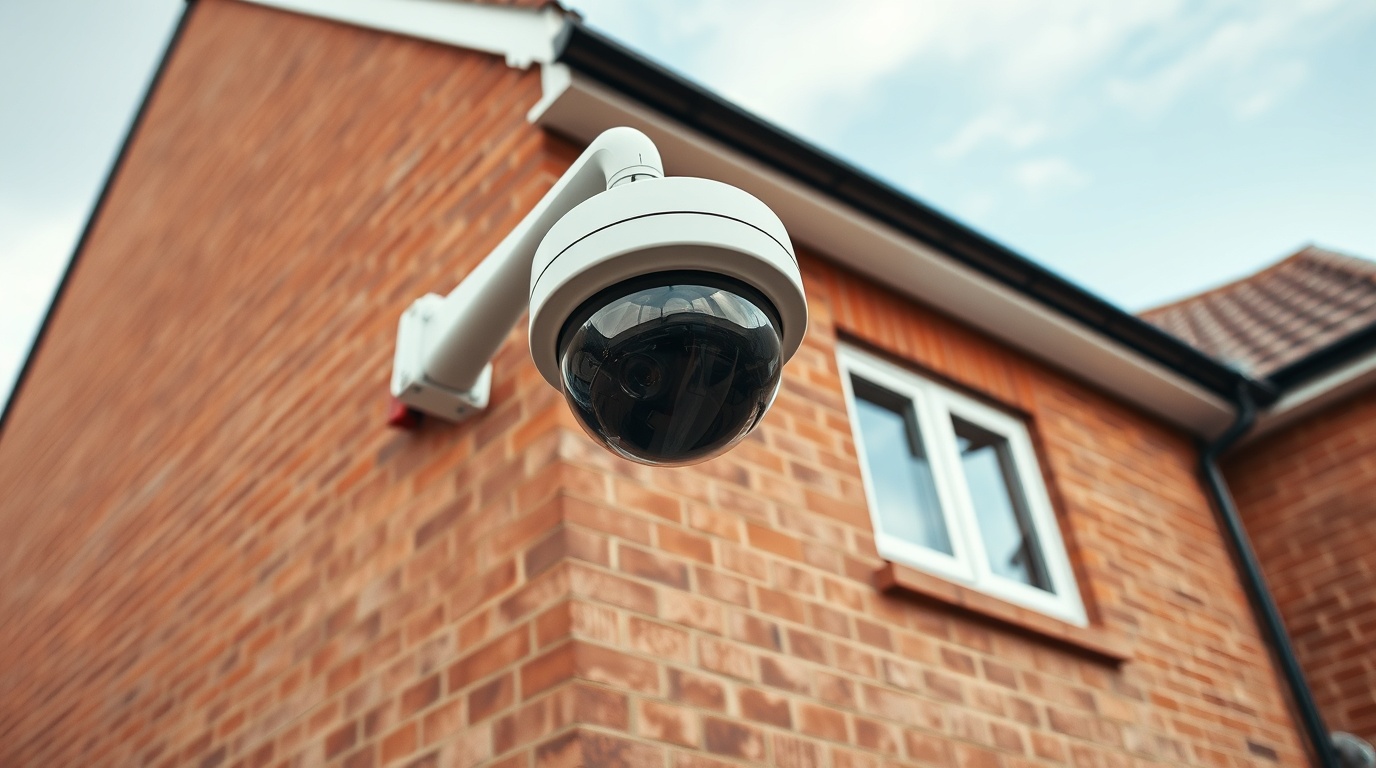
Where a camera is aimed matters as much as where it's placed. Height is a balance: mount the camera high enough that an intruder can't easily reach up to cover, twist or damage it, but not so high that it only sees the tops of people's heads. A camera under the eaves, angled down towards the approach, captures faces and movement well while staying out of reach. Too high and too flat, and you get useful-looking footage that never actually shows a recognisable face — a common and frustrating mistake.
Lighting is the other frequent error. A camera pointing into the sun at certain times of day, or facing a bright window or security light, will have its image washed out by glare just when you need it. Aim cameras so the light is generally behind or to the side of them, and check the view at different times — morning and evening sun can ruin a position that looked fine at midday. For night coverage, make sure the camera's infrared or low-light performance covers the area, and that nearby lights don't dazzle the sensor. Cameras with wide dynamic range handle mixed light better.
A few more positioning mistakes are worth avoiding. Don't mount a camera behind glass (an indoor camera through a window), as reflections and the infrared bouncing back ruin night footage. Keep lenses clear of obstructions like foliage, hanging baskets or guttering that will grow or sag into the view. Avoid aiming a camera at a large featureless wall or a busy road, where constant motion triggers endless false alerts. And make sure each camera is focused and framed on the area of interest, not zoomed too wide to be useful or too tight to give context. Getting these right is what turns a camera into evidence.
Staying within the law
Positioning isn't only about coverage — it has a legal dimension in the UK. If your CCTV captures only your own property, it's generally outside data protection law. But the moment a camera films beyond your boundary — a neighbour's garden, a shared driveway, or the public pavement and street — the Information Commissioner's Office (ICO) guidance on domestic CCTV applies, and you take on responsibilities: using the footage fairly, only keeping it as long as needed, and being able to respond if someone asks about footage of themselves. Filming a neighbour's property can also lead to disputes and complaints.
The practical answer is to position cameras to cover your own property as far as possible. Angle them to capture your doors, drive and garden rather than the neighbour's windows or the street. Where some overlap is unavoidable — a front camera that inevitably catches a slice of the pavement — the ICO guidance recognises this, but you should minimise it, and many cameras let you mask out areas of the view (privacy zones) so they're not recorded. It's good practice to make cameras visible and, where they might capture passers-by, to let people know recording takes place, for example with a sign.
It's also courteous, and often wise, to talk to neighbours before fitting cameras near a shared boundary, both to avoid disputes and because a reasonable arrangement is easier than a complaint after the fact. A professional installer will usually advise on positioning to stay within the guidance, but the responsibility for how the system is used rests with you as the operator. Reading the ICO's domestic CCTV guidance before you decide on positions is the simplest way to get both good coverage and a compliant, neighbourly system.
Frequently asked questions
What's the most important place to put a CCTV camera?
The front door. Most callers, deliveries and incidents happen there, and a well-angled camera captures the faces of anyone approaching. After that, the back and side doors and the driveway are the next priorities, as these cover the main entry points and approaches to a typical home.
How high should a CCTV camera be mounted?
High enough that an intruder can't easily reach up to cover or damage it, but angled down enough to capture faces rather than just the tops of heads. Under the eaves, aimed down towards the approach, is a common position that balances being out of reach with getting usable, identifying footage.
Can I point my CCTV camera at the street or my neighbour's garden?
You should avoid it where possible. If cameras capture areas beyond your boundary, the ICO's domestic CCTV guidance applies and you take on data protection responsibilities. Aim cameras at your own property, use privacy masking for unavoidable overlap, and talk to neighbours before fitting cameras near a shared boundary.
Sources & further reading
Figures on this page are typical UK ranges drawn from published sources and depend on your specific property and system. They are guidance, not a quotation.